Live roulette in Norway 2026: where it runs, and what it costs at the table
 Available in US
A Norwegian who searches for live roulette in 2026 is not really looking for a game. They are looking for a place to play it, and the place question has only one honest answer. Under pengespilloven, the right to offer online casino games in Norway belongs to Norsk Tipping, and to Norsk Tipping alone. Everything else — the offshore sites a Norwegian might find through a search engine, the apps advertised through influencers, the brands Norwegian players say they use — runs without that right. The Lottstift blocks them by DNS, Norwegian banks are forbidden to process payments to them, and the player on such a site steps outside the protection Norwegian law builds around the activity.
What follows is a description of the live roulette the law actually permits, of the rules Norsk Tipping runs under, of what those rules cost a player in cold numbers, and of what is lost on an offshore brand. The page is descriptive, not advisory. It does not recommend one operator over another, and it does not treat the offshore option as a real alternative. It spells out, instead, what each option actually is.
Currency snapshot, current as of 10 oktober 2026: data verified against Lottstifts public register and Norsk Tippings own published terms.
Table of Contents
- Spillutvalg og virkemåte: what live roulette actually is
- Enerett og rettstilstand: who is allowed to offer this in Norway
- Selvutestengelse og spillegrense: the player protection that exists, and what it costs
- Blokkjede og pseudonymitet: what the crypto option really is, and what it is not
- Premie og fordel: what a bonus on live roulette actually pays out
- Spillkatalog og volatilitet: which live tables a Norwegian player can actually sit at
- Vurderingsgrunnlag: the operator picture, side by side
- Norsk Tipping — the lawful option
- Norsk Rikstoto — horse betting only
- Roobet, Lucky Spins, ICE Casino, Stake, Rollbit, LiliBet, Rainbet, Lemon Casino — the offshore brands Norwegian players meet
- Skatteetaten og skatteloven: what happens to a winning from an offshore site
- Hvor man får hjelp: the support that exists, and how to reach it
- Hva en offshore-side ikke tilbyr
- Spørsmål og svar
Spillutvalg og virkemåte: what live roulette actually is
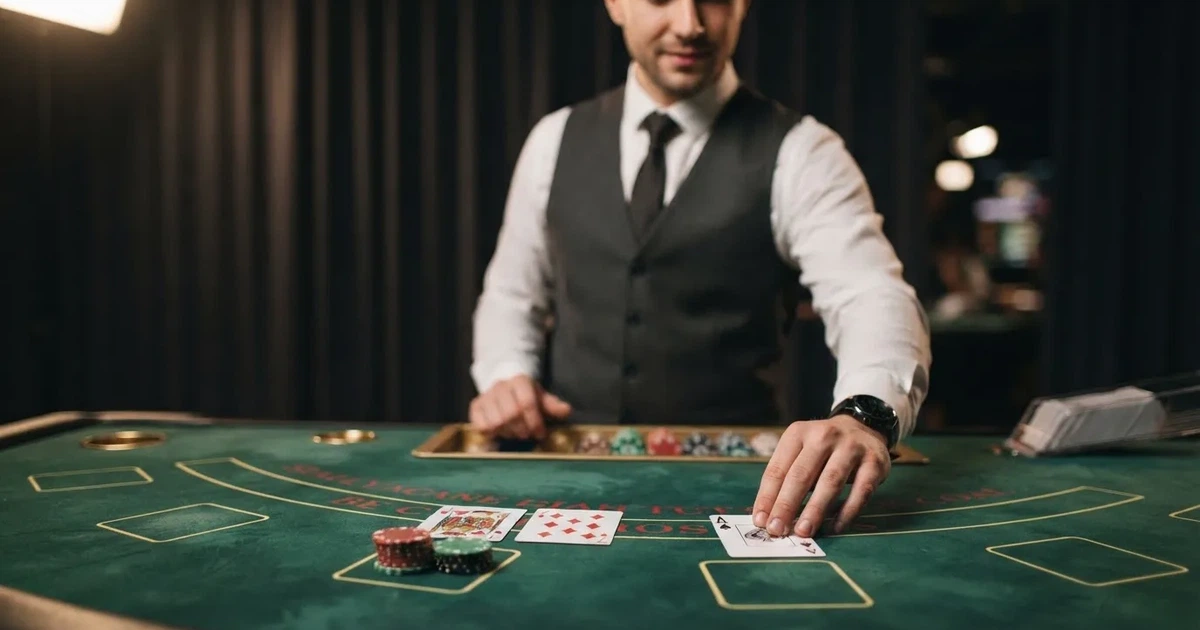
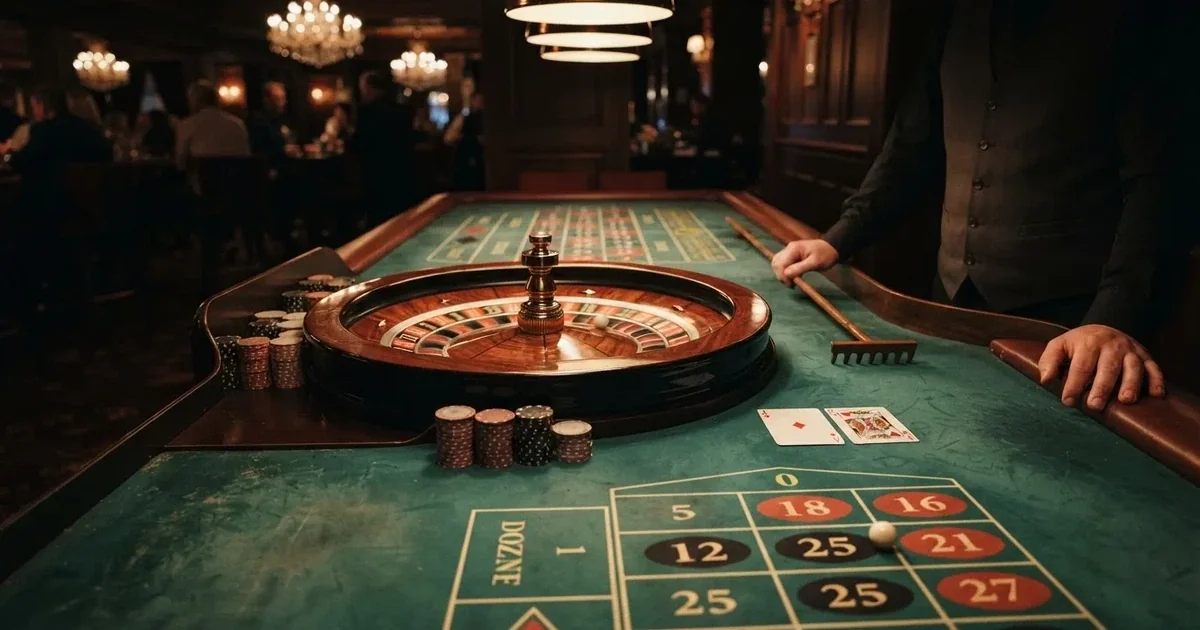
A live roulette game is a video stream from a real casino floor, or a studio dressed to look like one, with a real wheel and a real dealer and a digital betting layout laid on top of the picture. The player places chips on a virtual table; the dealer spins a physical wheel; a sensor reads the pocket; the result is broadcast back. The randomness comes from the wheel, the same way it always has. The computer only handles bets and payouts.
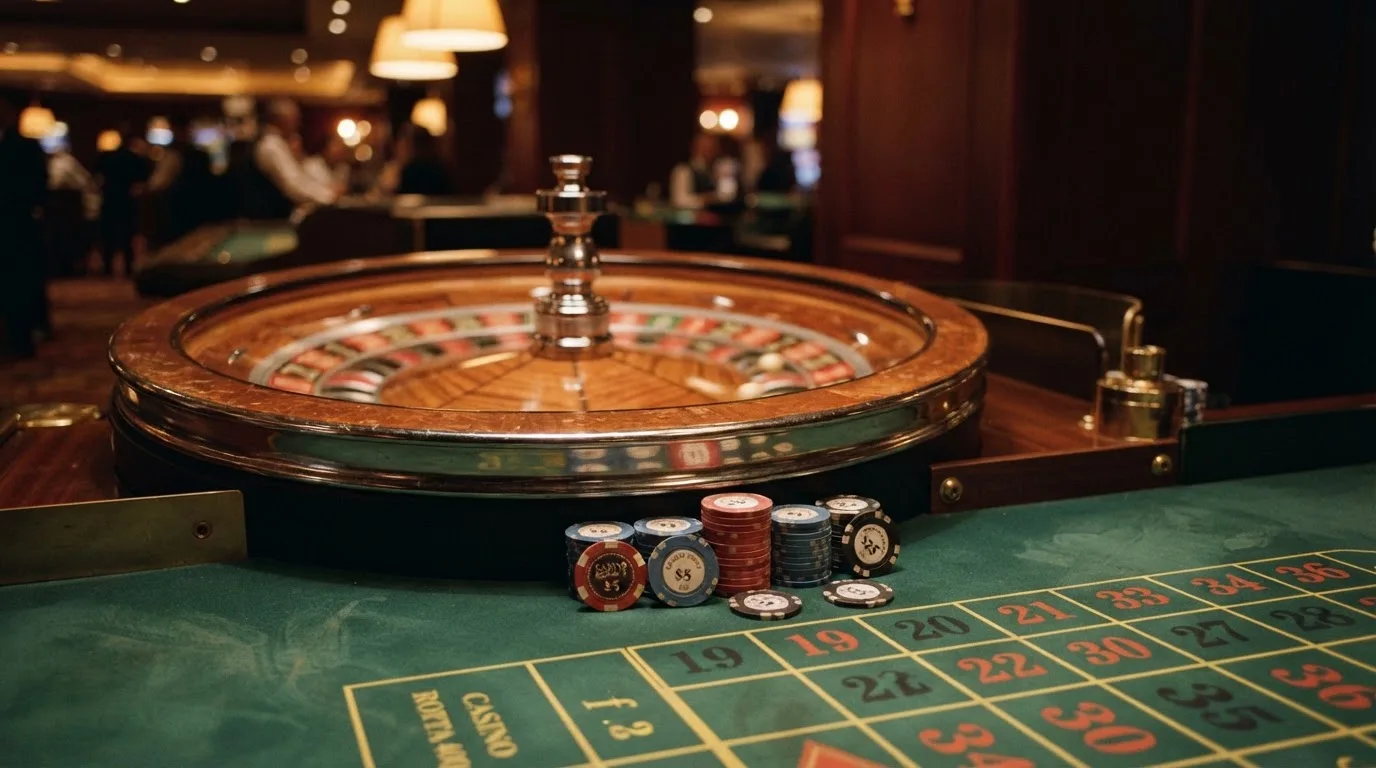
The wheel itself has a shape that decides how the game is priced. A European wheel carries 37 pockets, the numbers 1 to 36 plus a single green zero. An American wheel carries 38, the same numbers plus a second green double zero. The triple-zero variant that some studios run for higher house edge is rarer, but exists. Every other rule in the game sits on top of this geometry. A straight-up bet on a single number pays 35 to 1 on any of these wheels. A bet on red or black, odd or even, the high half or the low half pays 1 to 1. A dozen or a column pays 2 to 1. A split between two numbers pays 17 to 1, a street of three numbers 11 to 1, a corner of four numbers 8 to 1.
The geometry translates directly into a house edge, the percentage of every krone wagered that the casino expects to keep across a long run. On a European wheel the house edge is 2,70 prosent. On an American wheel it is 5,26 prosent. On a triple-zero wheel it climbs to 7,69 prosent. These are not marketing figures; they fall out of the wheel layout and the payout table, and they are the same number in Monte Carlo, in Macau, and on a studio stream from Riga. A handful of European rules soften them slightly. The French rule «en prison» lets the player recover half an even-money stake when the zero lands, and on a single-zero wheel that pulls the house edge down to about 1,35 prosent. On every other version of the bet, the published figure is what the player is paying.
The studio formats that live-dealer studios ship are mostly European-wheel variants with extra side games bolted on. Evolutions Lightning Roulette is the most familiar of the breed. In each round one to five «lucky numbers» are struck by the lightning effect, with multipliers from 50x to 500x. A straight-up bet that lands on a struck number pays out at the multiplier; a straight-up bet on an unstruck number pays only 29 to 1 instead of the usual 35 to 1. That reduction is the trade. The studio keeps the underlying European house edge on every other bet type, and adds an extra layer of variance on the inside bets only. Evolutions Immersive Roulette is a different aesthetic choice: multiple HD cameras at 200 frames a second, slow-motion replays of the winning number, the same wheel underneath. The format won EGRs game of the year in 2014. What the camera work adds is atmosphere. What it does not add is a better price for the player.
Roulette is older than the studio. The game is usually traced to the Italian Biribi, refined in French gaming houses in the 1700s. The single-zero wheel that defines the modern European game was introduced by François and Louis Blanc in Bad Homburg in 1843 to compete against casinos that ran the double-zero format, and the version that eventually became standard in Monte Carlo is theirs. The double-zero wheel crossed the Atlantic with French settlers and became the American game. None of this is decoration; it explains why two wheels sit behind the same name, and why a Norwegian who plays on a European wheel and a Norwegian who plays on an American one are paying two different prices for the same-looking game.
Enerett og rettstilstand: who is allowed to offer this in Norway
Norwegian gambling law runs on a system of exclusive rights, not on a system of licences. Lov om pengespill, the statute in force since 1 January 2023, gives Norsk Tipping AS the exclusive right to offer online casino games, betting, and lotteries in Norway, and gives Stiftelsen Norsk Rikstoto the exclusive right to offer betting on horse racing. Lotteri- og stiftelsestilsynet, known as Lottstift, supervises both. The system has no application process for a private operator, no route to a Norwegian licence, and no transitional arrangement for one.
The same statute forbids three things that a foreign operator needs to survive in the market. It is forbidden to offer gambling directed at Norway without permission. It is forbidden to facilitate payment transactions to such an offer. It is forbidden to market such an offer toward Norwegian players. The age limit is 18, gambling on credit is forbidden, and these rules are the same whether the offer sits on a server in Malta, in Curaçao, or in Anjouan.
What this means in practice is a small but enforceable set of consequences. DNS blocking, added to pengespilloven in 2025, lets Lottstift order Norwegian internet providers to cut resolution of an unlicensed domain. The first batch of decisions under the new power landed on 24 March 2025. The list of blocked sites has grown since. The register Lottstift publishes — «Blokkerte nettsteder februar 2026» — names the brands that Norwegian ISPs are currently required not to resolve. The payment-transaction ban, which predates the DNS power, cuts the second leg. Norwegian banks are forbidden to process deposits and withdrawals to unlicensed operators, and a brand that cannot accept a Norwegian krone cannot really serve a Norwegian player.
The 2026 Lottstift register, taken alongside the agency’s 24 November 2025 notice, lists 178 individual URLs from 72 different companies across the two batches. The brands that recur in Norwegian player forums — and which appear in research for this page — are all on one list or the other. Roobet, Luckyspins, ICE Casino, Rollbit, LiliBet, Rainbet, Lemon Casino: each appears in Lottstift’s blocking register or in the November 2025 notice, in some cases both. The list is not a blacklist that names a person; it names a domain. A Norwegian player is not personally sanctioned for using one. The site simply stops resolving, the payment stops going through, and the operator that survives does so by skirting Norwegian infrastructure rather than operating within it.
A note on what the Norwegian system is not. There is no Norwegian licence a private casino can apply for. There is no government proposal on the table to introduce one. The two exclusive rights are the system. A claim that «Norway licences casinos under the Maltese regime» is wrong on its face: the Maltese regime licences casinos in Malta. The Norwegian regime does not licence any casino besides Norsk Tipping and Norsk Rikstoto.
Selvutestengelse og spillegrense: the player protection that exists, and what it costs
The Norwegian system of player protection is built into the operator, because there is only one operator. Norsk Tipping identifies every player, attaches the play to a personal account, and applies a published set of limits that a player cannot raise above and can only lower. The system predates online play in the form it is now in, but the principle is the same: the house is the state, and the state has decided that the right to play comes with a ceiling.
The ceiling has a structure. Across every Norsk Tipping game, a player may not lose more than 20 000 kr in a calendar month. Within that overall cap, the four casino-style products — KongKasino, Flax, Bingoria, and Yezz — carry tighter per-game limits of 5 000 kr per month and 2 000 kr per day on each one. The figure is a loss limit, not a deposit limit. A player may deposit 5 000 kr, win 2 000 kr, and play on; what is capped is the negative end of the month. The player also has to set a daily time limit before play starts, and that time limit cannot exceed 18 hours in any one day. Time limits, like the loss limits, are personal and adjustable, but the rules around raising them are stricter than the rules around lowering them: a lowered limit takes effect immediately, a raised daily limit kicks in only after at least 24 hours, and a raised monthly limit applies from the start of the next month. The system forces a cool-down into the act of changing it.
A second, lower tier of limits applies to younger players. A player under 20 may not lose more than 2 000 kr across Norsk Tipping in a month. A player between 20 and 21 may not lose more than 3 000 kr. A player between 22 and 24 may not lose more than 5 000 kr. Past 25 the adult cap of 20 000 kr per month applies. The intent is a graduated step-up to the full limit, and it is the only part of the Norwegian system that distinguishes one player from another on the basis of age.
What does the limit cost a player? The answer is a band, not a single number, and the band is set by the wheel the player sits at and the way they bet. A player who plays European roulette with even-money stakes — red, black, odd, even, the high half, the low half — pays the published 2,70 prosent house edge on every spin. Over a month, the most a Norwegian player can lose on Norsk Tipping’s four casino products is the 5 000 kr KongKasino ceiling, or the 20 000 kr overall ceiling if they spread play across the wider product set. On the KongKasino ceiling, the expected loss is the same fraction of the same number regardless of stake size: 2,70 prosent of whatever the player wagers, and the wager cannot exceed the loss budget because the loss budget caps it. On the full 20 000 kr overall cap, the same arithmetic runs the same way. A player who plays American roulette instead — a 5,26 prosent house edge — runs through their budget nearly twice as fast. A player chasing a single-zero variant with the «en prison» rule, where the house edge on even-money bets is 1,35 prosent, runs through it at half the European rate. The published caps are the same; what changes is how long the player stays in the game before the cap stops them.
Translated to time at the table, the picture is a different one. A player who wagers 20 kr per spin on European roulette plays through 100 kr in five spins, 1 000 kr in fifty, 5 000 kr in two hundred and fifty. At a comfortable pace of one spin every fifteen seconds, the 5 000 kr KongKasino monthly cap on a single product is roughly an hour of table time before the limit stops play. A player who spreads the same 5 000 kr across several bets per spin runs through the budget faster. The same arithmetic on the full 20 000 kr cap, with a moderate stake, lands somewhere in the four-to-eight-hour band for a single session, which is precisely why the daily time limit exists and why it is capped at 18 hours: the law does not imagine a player sitting at the table for that long, and the limit makes the worst case enforceable.
A player who hits the cap, raises it, and hits it again, on the same product, in the same month, cannot. The 24-hour delay on a raised daily limit and the next-month rule on a raised monthly limit are designed to make a hot-streak reaction impossible. The lower cap for the under-25 player applies whether the player has ever self-excluded or not, and it is enforced at account opening, not at the point of distress.
Self-exclusion at Norsk Tipping is operated through the same account. A player who excludes themselves is locked out of every Norsk Tipping product for the period they choose, and the lock is on the person, not on the product. The state operator is one of the easier places in the world to self-exclude from, because there is nowhere else to take the play.
Blokkjede og pseudonymitet: what the crypto option really is, and what it is not
The Norwegian search set includes a thread on bitcoin live casino roulette and its cousins, and the question that thread really asks is whether a Norwegian player can sidestep the Norwegian system by using a currency the system does not see. The honest answer is partial. Crypto solves one part of the offshore problem and exposes the player to another.
The part crypto solves is the payment-transaction ban. Norwegian banks are forbidden to process payments to unlicensed operators, and the ban is on the bank, not on the player. A bank that sees a transfer to a known unlicensed operator is obliged to refuse it. A transfer in bitcoin, litecoin, or USDT does not pass through a Norwegian bank at all. It moves from the player’s wallet to the operator’s wallet, on a public ledger, without a correspondent bank in the middle. The bank-side ban has nothing to grab.
The part crypto does not solve is the DNS block. An internet provider in Norway is required not to resolve a blocked domain. The block sits at the network layer, not at the payment layer, and a player who reaches a blocked domain through a VPN or through a direct wallet address to a mirror site is still using the unlicensed service the law describes. The legal characterisation of the play does not change with the rail.
The deeper cost of the crypto option is regulatory. A foreign operator that accepts crypto and serves Norwegian players without a Norwegian licence is, in Norwegian law, an unlicensed operator. The player on that operator does not get Norsk Tipping’s loss limits, does not get Norsk Tipping’s identification, does not get the Norwegian self-exclusion system, and does not get the Norwegian tax treatment. The win is taxable under skatteloven § 5-50 in the same way any win from a commercial foreign operator is taxable. The Norwegian tax treatment of a foreign crypto casino is identical to the Norwegian tax treatment of any other offshore site: a single winning above 10 000 kr is, as a rule, taxable, regardless of the currency it was paid in.
The names that Norwegian players meet on this side of the market are recognisably crypto-native. Roobet is one. Rollbit is another. Both have appeared in the Lottstift blocking register. The chain on which a transaction settles is incidental to the legal question; what matters is whether the operator holds the Norwegian right to serve the player, and none of these brands do.
A second question that the crypto route raises is one of pseudonymity, and the answer is less favourable than the marketing suggests. A bitcoin address is not a name. It is a transaction handle. The chain is public, every transaction is on it, and a single linkage between an address and a person unmakes the pseudonymity for every transaction the address has ever carried. Norwegian tax authorities can, and do, request chain analysis from specialist firms. The medium of payment is not the same thing as the privacy of the payment.
Premie og fordel: what a bonus on live roulette actually pays out
A search for live roulette bonus is the most common way a Norwegian player arrives at a live-dealer site that is not Norsk Tipping. The offer that waits there is, in structure, the same offer every offshore casino makes: a deposit match, a percentage of the deposit added as bonus money, and a multiplier on the bonus that has to be turned over before the bonus can be withdrawn. The house edge on the wheel is unchanged by the offer. The bonus is a separate transaction, and it has its own cost.
The cost is the wagering multiple. A typical live-roulette bonus at an offshore operator carries a wagering requirement of 30x to 50x the bonus amount before any of the bonus money is released. A 1 000 kr bonus at 35x is 35 000 kr of wagering through the bonus balance, at the published house edge of the wheel, before the bonus becomes withdrawable. The expected loss of clearing that bonus, on European roulette, is 35 000 kr × 2,70 prosent, which is 945 kr. The expected loss of clearing the same bonus on American roulette, at 5,26 prosent, is 1 841 kr. The bonus has a real cost that is not described by the headline figure.
There is a second, less obvious cost, and that is the contribution rate. Most live-roulette games contribute only a fraction of each wager to the wagering requirement, often 10 prosent to 20 prosent, because the house edge on roulette is high relative to slot games. A 1 000 kr bonus at 35x, played on a game that contributes 10 prosent, requires 350 000 kr of wagering rather than 35 000 kr. The expected loss of clearing the bonus rises accordingly. Some games — usually the live-dealer variants of blackjack, sometimes roulette — are excluded from bonus play entirely. The fine print matters more than the headline.
Norsk Tipping’s own bonus structure is different. There is no deposit match, no wagering multiple, no contribution rate. The closest the state operator comes to a live-roulette promotion is KongKasino’s own game catalogue, with the published average payout of around 95 prosent across the suite. The bonus of choosing Norsk Tipping is not a financial sweetener; it is the absence of the offshore transaction.
The marketing word on the offshore offer is «free». The arithmetic on the offer is the wagering multiple, the contribution rate, the maximum-cashout cap, and the house edge of the wheel the offer is played on. None of these are described in the headline. They are the only numbers that matter.
Spillkatalog og volatilitet: which live tables a Norwegian player can actually sit at
The Norsk Tipping live-roulette catalogue sits inside KongKasino, the casino vertical of the Norsk Tipping platform. The brand is the state operator, the studio partners are the mainstream European live-dealer studios, and the catalogue is narrower than what an offshore brand ships. What the catalogue offers in exchange is the legal right to be played by a Norwegian in Norway.
The mechanics inside KongKasino are the European mechanics, not the American ones. A 37-pocket wheel is the standard; the published payout ratio on the suite is around 95 prosent in the long run, which is consistent with a single-zero wheel at the standard even-money bet mix, and slightly above what a triple-zero variant returns. Side-bet structures are studio-specific, and a few of the more exotic variants that have appeared on the European market in recent years — Lightning Roulette, the various «XXXtreme» formats — are not always present in the Norsk Tipping library. The state operator ships a curated set, not the full long tail.
Norsk Tipping does not publish the title-by-title RTP for every KongKasino game. The figure for the suite as a whole is published, and the per-game figure is given when a player opens the individual title. A Norwegian player who wants to compare one live-roulette variant to another within the state operator has the figure available on the game’s own page. The state operator’s compliance is to publish the number; the player’s job is to read it.
The offshore catalogue is, by volume, larger. A Norwegian player who reaches an unlicensed site — through whatever means — sees the full Evolution catalogue, the Pragmatic Play Live catalogue, the OnAir, the Ezugi, the Vivo Gaming, and a long tail of smaller studios. Each studio has its own roulette variants, its own side bets, its own house rules. The 95-to-98 prosent payout band that online casinos usually advertise is real, and a few titles push above it. The same offshore catalogue also carries the American-wheel variants, the triple-zero variants, the bonus-wheel variants with side bets that pay 200 to 1 on a long shot, and the high-volatility formats that pay less often and bigger when they do. The breadth is a real feature, and the absence of any Norwegian oversight on the catalogue is the matching real cost.
A Norwegian player who wants Lightning Roulette specifically, or Immersive Roulette, or one of the localised-language dealer tables, will find them on the offshore market and not, in most cases, on Norsk Tipping. The trade is not a close call. The state operator offers the wheel under Norwegian law, with a Norwegian loss limit, with a Norwegian self-exclusion system, with tax-free winnings. The offshore operator offers a wider catalogue without any of those. A reader can decide for themselves which side of that trade they want to be on, and the rest of this page describes each side in turn.
Vurderingsgrunnlag: the operator picture, side by side
The table below is a structural picture, not a recommendation. Card 1 is Norsk Tipping itself, the only operator with a Norwegian right to offer online casino games. Card 2 is Norsk Rikstoto, which has the right to offer horse betting and no other product. The remaining cards are brands that Norwegian players encounter but that hold no Norwegian right at all; their presence on a comparison page is to name them, not to position them against Norsk Tipping. The columns are matters the page has to compare; the order is the order the page reads them in.
| Merke | Status i Norge | Utenlandsk lisens | Lottstift-vedtak |
|---|---|---|---|
| Norsk Tipping | Enerett på nettkasino, odds og lotteri | Statlig enerett, ingen utenlandsk lisens | Ikke relevant — statlig tilsynsobjekt |
| Norsk Rikstoto | Enerett på hestespill | Statlig enerett, ingen utenlandsk lisens | Ikke relevant — statlig tilsynsobjekt |
| Roobet | Ingen tillatelse | Curaçao (Curaçao Gaming Authority) | Opplistet i Lottstifts varsel 24. november 2025; DNS-blokkert |
| Lucky Spins | Ingen tillatelse | — | Opplistet i «Blokkerte nettsteder februar 2026» |
| ICE Casino | Ingen tillatelse | — | Opplistet i Lottstifts varsel 24. november 2025; DNS-blokkert |
| Stake | Ingen tillatelse | Curaçao, OGL/2024/1451/0918 (Curaçao Gaming Authority) | — |
| Rollbit | Ingen tillatelse | — | Opplistet i «Blokkerte nettsteder februar 2026» |
| LiliBet | Ingen tillatelse | — | Opplistet i «Blokkerte nettsteder februar 2026» |
| Rainbet | Ingen tillatelse | Anjouan | — |
| Lemon Casino | Ingen tillatelse | — | Vedtak 19. februar 2026 (25/00681-308), frist 26. februar 2026; opplistet i varsel 24. november 2025 |
The first two rows are the legal structure. The remaining eight are the brands a Norwegian player is most likely to encounter if they look for live roulette outside that structure, and the picture the table draws is uniform: each of them holds a foreign licence, most of them sit on the Lottstift blocking register or in the November 2025 notice, and none of them has a route to a Norwegian right. The licence column is uneven because not every brand publishes its licence number in the source materials this page works from. The Lottstift-vedtak column is uneven for the opposite reason: a brand can be unlicensed without being on the published block list at the moment this page was written. The state of the register on any given day is a snapshot, not a fixed grade.
Norsk Tipping — the lawful option
Norsk Tipping is the only operator with the legal right to offer online casino games to a Norwegian player in Norway. The right is the exclusive right under pengespilloven §§ 10 and 11, given to the state-owned company and supervised by Lottstift. The platform is the only place in the Norwegian market where a live-roulette game is offered under the protections Norwegian law builds around the activity. The catalogue sits inside KongKasino; the published average payout is around 95 prosent; the per-game RTP is given on the game’s own page.
The loss limit is the public face of the protection. A player on KongKasino cannot lose more than 5 000 kr per month or 2 000 kr per day on the casino-style products; across the wider Norsk Tipping product set, the monthly loss cap is 20 000 kr. The cap cannot be raised above the published figure. It can only be lowered, and the rules around raising it again are designed to slow the player down: 24 hours for a daily limit, the start of the next month for a monthly limit. The time limit is set by the player before play, capped at 18 hours, and the system enforces it.
The tax treatment is the second leg of the offer. A win on Norsk Tipping is tax-free whatever the amount, because the operator is the state and the winnings are not classed as commercial income. The same rule covers Norsk Tipping lotteries, sports betting, and KongKasino alike.
The catalogue is the trade. Norsk Tipping does not ship the full European live-dealer range. The studios on the platform are mainstream; the variants are the standard European-wheel formats and a curated set of side-bet games; some of the more exotic formats a player can find on the offshore market are not present. A player who wants Lightning Roulette with the full multiplier structure will not find it on the state operator in most cases. The state operator ships a narrower set, under tighter rules, for a tax-free player.
Verdict: the only option in Norway for a Norwegian who wants to play under Norwegian law. The catalogue is narrower than the offshore market; the rules are stricter than the offshore market; the protection is real and the cost of it is the choice of games it leaves out.
Norsk Rikstoto — horse betting only
Norsk Rikstoto holds the exclusive right to offer betting on horse racing in Norway, under pengespilloven § 14. The right is held by Stiftelsen Norsk Rikstoto and supervised by Lottstift. The product is horse betting. There is no casino, no live roulette, no live-dealer game. The mention of Norsk Rikstoto on a page about live roulette is not because it offers live roulette; it is because a Norwegian player who searches for «Norsk» and «kasino» in the same breath meets the name, and deserves to be told what the name actually means.
The site at rikstoto.no is the place to bet on a horse race. The catalogue is races, not wheels. The supervision is Lottstift, the same as Norsk Tipping, and the same statutory protection extends to it.
Verdict: not a live-roulette operator. The name belongs on the page because the searcher will meet it, and the searcher learns it offers a different product under the same regulatory roof.
Roobet, Lucky Spins, ICE Casino, Stake, Rollbit, LiliBet, Rainbet, Lemon Casino — the offshore brands Norwegian players meet
What follows is a structural description of eight brands that Norwegian players encounter when they look for live roulette outside the state operator. None of these brands has a Norwegian right to offer the product. The Norwegian right does not exist for a private operator. The descriptions below name the operator, the company behind it, the foreign licence it holds where the source materials disclose one, and the Lottstift decision that touches it where one has been published. They do not describe bonus offers, do not describe sign-up processes, and do not list domains. The descriptions are about the legal and corporate shape of the brand, not about what the player gets if they play on it.
Roobet
Roobet is operated by a company registered in Curaçao. It is named in Lottstift’s 24 November 2025 notice among 178 sites subject to a DNS-blocking order, and it appears on the Lottstift blocking register for 2026. The site accepts crypto. The Norwegian legal status is that of an unlicensed operator; the Norwegian player is outside the Lottstift-supervised system. The Lottstift-vedtak column on the table reflects this: the operator is blocked, the brand continues to operate outside Norwegian infrastructure.
Lucky Spins
Lucky Spins is an offshore operator. The domain appears in Lottstift’s «Blokkerte nettsteder februar 2026» register. The licence behind the operator is not disclosed in the source materials this page works from, and the cell in the table reflects that. The brand’s presence in a Norwegian search is a presence on the block list rather than a presence in the lawful market.
ICE Casino
ICE Casino is an offshore brand, which is one of 178 sites named in the Lottstift notice of 24 November 2025. The licence is not stated in the source materials. The brand is among the more frequently advertised ones on Norwegian-facing affiliate pages, which is why it appears on this page; the legal status is the same as every other brand in the offshore cluster.
Stake
Stake runs at stake.com and is operated by Medium Rare N.V., registered in Curaçao under company number 145353. The Curaçao Gaming Authority register lists the company as holding licence OGL/2024/1451/0918. The licence is a Curaçao licence. It is not a Norwegian licence. The Norwegian treatment of a Curaçao-licensed operator is the treatment of an unlicensed operator, and a player on Stake from Norway is outside the Norwegian system.
Rollbit
Rollbit is an offshore operator. The domain is on the Lottstift «Blokkerte nettsteder februar 2026» register. The licence is not disclosed in the source materials. The brand offers live roulette and a sports book; the legal status in Norway is the same as the rest of the offshore cluster.
LiliBet
LiliBet is an offshore operator. Both domains are on the Lottstift «Blokkerte nettsteder februar 2026» register. The licence is not disclosed in the source materials. The Norwegian-facing mirror in the second domain is a sign of the offshore brand targeting the Norwegian player, which is the activity pengespilloven § 4 forbids.
Rainbet
Rainbet is operated by Rain Group Ltd, registered in Anjouan under company number 16077, with the registered address Hamchako, Mutsamudu, Anjouan, Unionen Komorene. The published terms state that the company holds a licence in Anjouan for online gaming. The Norwegian treatment of an Anjouan licence is the treatment of an unlicensed operator, and the Norwegian player on Rainbet is outside the Norwegian system.
Lemon Casino
Lemon Casino is an offshore operator. The site is named in Lottstift’s 24 November 2025 notice, and a specific Lottstift decision of 19 February 2026 (reference 25/00681-308) orders Norwegian ISPs to DNS-block the domain, with a compliance deadline of 26 February 2026. The brand is one of the clearer cases in the register: a named decision, a named deadline, a domain in the Lottstift block list.
Verdict on the cluster: each brand offers live roulette under a foreign licence, accepts Norwegian-facing traffic at its own risk, and sits in the Lottstift blocking register or notice. The Norwegian player on any of them is outside the Lottstift-supervised system, pays tax on winnings above the 10 000 kr threshold under skatteloven § 5-50, and cannot use the Norwegian self-exclusion system, because there is no Norwegian operator to self-exclude from. The cluster is not a ranking. The brands are listed in the order of the operator set in research, and the only question the page answers is what the legal picture looks like for each.
Skatteetaten og skatteloven: what happens to a winning from an offshore site
A win on Norsk Tipping is tax-free whatever the amount. A win on Norsk Rikstoto is tax-free whatever the amount. The reason is structural: the operator is the state, the winnings are not classed as commercial income, and the tax code does not tax them. A player who plays only inside the state system does not file a gambling tax return.
A win on an offshore operator is a different question, and the answer is the one the tax code gives. Skatteloven § 5-50 taxes a single winning above 10 000 kr from a commercial foreign gaming operator as ordinary income. The threshold is 10 000 kr on a single win, not 10 000 kr across a year, and an EEA licence does not change the treatment. A Maltese licence is not a Norwegian licence; a Curaçao licence is not a Norwegian licence; an Anjouan licence is not a Norwegian licence. The treatment is the same. A Norwegian player who wins 12 000 kr on a single spin at an offshore site owes tax on the full amount, and the operator is not going to withhold it for them. The player’s own return is where the tax is settled.
A second offshore question is the reporting question, and the answer is that the Norwegian tax authorities have access to the same Lottstift register a player has. The chain of evidence — a domain in the block list, a payment to or from the operator, a win posted to the player’s account — is a chain the tax authority can follow, and a player who assumes that an offshore site is invisible to Skatteetaten is wrong.
The lawful path is the one the law was written to encourage. A player who plays on Norsk Tipping does not owe tax on the win. A player who plays on an offshore site may owe tax, and the offshore site does not handle the withholding.
Hvor man får hjelp: the support that exists, and how to reach it
Hjelpelinjen for spilleproblemer is the Norwegian national helpline for gambling problems. The number is 800 800 40. The line is free, anonymous, and staffed by health personnel who are specialists in gambling-related harm. The number is the same from anywhere in Norway. The line is operated on behalf of the Norwegian authorities, and the anonymity is genuine: a player who calls does not have to identify themselves to receive help.
A player who wants to stop playing has two doors. The first is the Hjelpelinjen, which is the clinical and counselling side. The second is the Norsk Tipping account, where the player can self-exclude from every Norsk Tipping product at once. The two systems are independent. Self-excluding from Norsk Tipping does not stop a player from using an offshore site; using the Hjelpelinjen does not, on its own, stop a player from playing on the state operator. A player who wants both doors closed has to ask both for what they need.
A third door is the Lottstift register itself. A player who is serious about staying away from offshore sites can ask their internet provider about the parental-control features the provider offers, and a player who has a spouse or family member willing to participate can ask the same provider about account-level DNS controls. These are not Norwegian state programmes, but they work in the same direction as the state policy.
The Norwegian system assumes that the player who has a problem is the player who knows it first, and gives that player a free, anonymous, clinically staffed number to call. The number is 800 800 40.
Hva en offshore-side ikke tilbyr
A player on an offshore site gives up four things that the Norwegian system provides. The first is the loss limit. The 5 000 kr KongKasino cap, the 20 000 kr overall cap, the 24-hour delay on a raised daily limit, the next-month rule on a raised monthly limit — none of these exist on an offshore site. An offshore site has a deposit limit, sometimes, set by the player, often unset, and not enforced by Norwegian law. A player on an offshore site plays with a budget they set themselves, and the budget is the only ceiling.
The second is the identification. Norsk Tipping identifies every player, ties the play to a personal account, and uses the identification to enforce the loss limit, the time limit, the age limit, and the self-exclusion. An offshore site may identify the player, may not, and the player has no way to be sure which. The Norwegian identification is the mechanism that makes the other protections enforceable.
The third is the supervision. Lottstift supervises Norsk Tipping. Lottstift does not supervise an offshore site. A player with a complaint against Norsk Tipping has a regulator to take it to; a player with a complaint against an offshore site has the offshore site, in the language the offshore site’s terms specify, under the offshore site’s interpretation of the offshore site’s own rules.
The fourth is the tax treatment. A win on Norsk Tipping is tax-free. A win on an offshore site may be taxable. The threshold is 10 000 kr, the basis is skatteloven § 5-50, and the player owes the tax whether the operator withholds it or not.
A player who reads this list and decides that the offshore offer is still worth it is making a decision the page does not second-guess. The page describes the trade. The player makes it.
Spørsmål og svar
Er «live roulette in norway» lovlig i Norge?
Ja, på Norsk Tipping under pengespilloven. Norsk Tipping har enerett på å tilby nettkasino i Norge, og selskapet tilbyr live roulette i KongKasino. Andre aktører har ikke norsk tillatelse, og Lottstift DNS-blokkerer utenlandske sider. Spilleren selv straffes ikke; tilbudet stopper ved blokkeringen.
Hvem har lov til å tilby nettcasino i Norge?
Kun Norsk Tipping. Stiftelsen Norsk Rikstoto har enerett på hestespill, men tilbyr ikke kasinospill. Det finnes ingen søknadsprosess for privat aktør, og ingen plan om å innføre en. En utenlandsk lisens gir ikke rett til å tilby tjenester mot norske spillere.
Hvilke tapsgrenser gjelder hos Norsk Tipping?
Total tapsgrense er 20 000 kr per måned. For hvert av spillene KongKasino, Flax, Bingoria og Yezz er grensen 5 000 kr per måned og 2 000 kr per dag. Spilleren setter selv en daglig tidsgrense på maksimalt 18 timer. Senkning gjelder umiddelbart, mens heving av dagsgrense har 24 timers ventetid.
Hva betyr DNS-blokkering av utenlandske spillsider?
Lottstift gir norske internettilbydere pålegg om å ikke resolvere bestemte utenlandske domener, slik at sidene ikke kan nås uten VPN. Betalingsformidlingsforbudet rammer i tillegg overføringer mellom norske banker og disse aktørene. Spilleren blir ikke straffet for å bruke sidene, men selve tilbudet gjøres utilgjengelig.
Må man betale skatt av gevinster fra nettcasino?
Gevinster fra Norsk Tipping er skattefrie. Gevinster over 10 000 kr fra utenlandske spillsider er som hovedregel skattepliktige etter skatteloven § 5-50, uavhengig av om operatøren har EEA-lisens eller ikke. Spilleren selv må innberette og betale skatten; operatøren holder normalt ikke tilbake.
Hvor kan man få hjelp ved spilleproblemer i Norge?
Hjelpelinjen for spilleproblemer har telefon 800 800 40. Linjen er gratis, anonym og betjent av helsepersonell med spesialisering i spilleproblemer. Selvutestengelse hos Norsk Tipping gjøres via spillerens egen konto og gjelder alle selskapets spill.
Published by the Casino Pengespill Info team.